REAL-TIME DATA PROCESSING
Deliver Quick Insights with Qlik's Real-Time Data Processing Platform
Process and deliver prompt insights with real-time data capabilities. Stream, transform, and analyze data as it happens to drive faster, smarter business decisions with live data intelligence.

Turn live data streams into actionable insights across the enterprise
Capture, process, and deliver streaming data with enterprise-grade real-time processing that combines continuous transformation, intelligent enrichment, and automated delivery for immediate business impact.

Capture and stream data in real time from any source
Ingest live data from IoT devices, applications, databases, and message queues with minimal latency, enabling immediate visibility into operations, customer activity, and market changes.

Automate data transformation and enrichment on the fly
Apply business logic, validations, and enrichment to data in motion without batch delays, ensuring downstream systems receive clean, contextualized information instantly.

Enable real-time dashboards, alerts, and predictive actions
Power live visualizations, trigger automated responses, and enable predictive analytics that operate on current data rather than historical snapshots, enabling proactive decision-making.
How does Qlik's real-time data processing work?
Step 1 - Stream and ingest data continuously from multiple systems
Step 2 - Clean, transform, and enrich data in motion
Step 3 - Analyze and visualize events as they happen
Step 4 - Automate quick business responses and actions

Why Qlik real-time data processing?
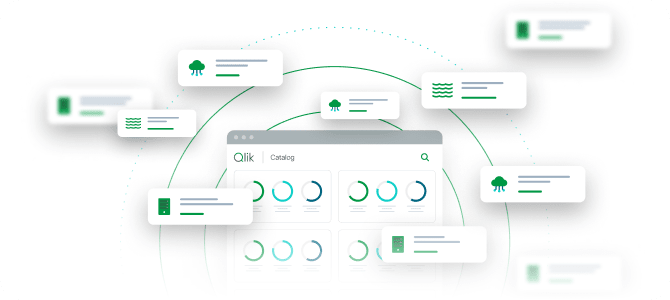
Process millions of events per second reliably
Handle extreme data velocities with distributed stream processing that maintains consistent low latency even during traffic spikes, using auto-scaling and intelligent load distribution.

Deploy real-time processing anywhere
Run streaming pipelines on any infrastructure — public clouds, private data centers, or edge locations—with consistent capabilities and centralized management across distributed deployments.
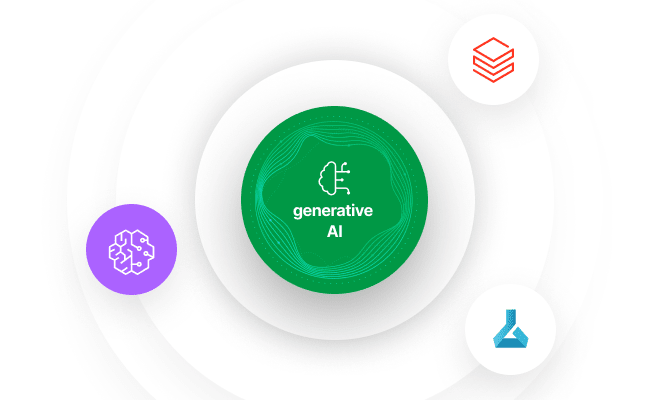
Combine streaming data with AI-driven automation
Apply machine learning models to live data streams for real-time predictions, anomaly detection, and automated recommendations that enhance human decision-making with intelligent assistance.

Enterprise reliability for mission-critical streams
Ensure continuous processing with automatic failover, exactly-once semantics, and state recovery that maintains data integrity and processing continuity even during system failures.

Proven for business-critical real-time operations
Join organizations across industries that process billions of real-time events daily to monitor operations, serve customers, detect fraud, and optimize processes with immediate intelligence.
Key capabilities of Qlik's real-time data processing platform

Continuous data streaming and change data capture (CDC)
Capture every data modification from databases using log-based CDC that monitors transaction logs without impacting source performance, ensuring complete capture of changes as they occur.

Real-time transformation and event processing
Apply complex transformations, stateful operations, windowing, and aggregations to streaming data using SQL-like languages and visual tools that simplify real-time pipeline development.

Advanced monitoring, lineage, and performance optimization
Track streaming pipeline health with comprehensive metrics for throughput, latency, errors, and resource utilization while maintaining visibility into data lineage across real-time flows.

Integration with analytics, AI, and machine learning workflows
Feed real-time data into analytics platforms, train machine learning models on live streams, and deploy models that score events in real time for immediate predictions and actions.

Automated alerts and data-driven triggers
Configure intelligent alerting based on complex patterns, thresholds, and conditions in streaming data, with escalation policies and automated remediation that responds to critical situations.

Enterprise-grade security and governance
Protect streaming data with encryption, access controls, data masking, and audit logging while maintaining the throughput and latency required for real-time business operations.
Trusted by the world’s leading enterprises


We started an automation process with Qlik and now we only have half the people managing reports. The other half is doing activities allowing us to leapfrog the competition by providing even more proactive analytics vs. reactive.


Connect to 500+ data sources with Qlik’s analytics integrations

SAP

Adobe

IBM

AWS

MySQL

Jira

Azure

MS SQL

Apache

Mongo DB
SAP
Adobe
IBM
AWS
MySQL
Jira
Azure
MS SQL
Apache
Mongo DB
SAP
Adobe
IBM
AWS
MySQL
Jira
Azure
MS SQL
Apache
Mongo DB
SAP
Adobe
IBM
AWS
MySQL
Jira
Azure
MS SQL
Apache
Mongo DB
SAP
Adobe
IBM
AWS
MySQL
Jira
Azure
MS SQL
Apache
Mongo DB

Oracle

Salesforce

Workday

Apache Iceberg

CircleCI

Zendesk

Snowflake

Databricks


OpenAI

Intuit
Oracle
Salesforce
Workday
Apache Iceberg
CircleCI
Zendesk
Snowflake
Databricks
OpenAI
Intuit
Oracle
Salesforce
Workday
Apache Iceberg
CircleCI
Zendesk
Snowflake
Databricks
OpenAI
Intuit
Oracle
Salesforce
Workday
Apache Iceberg
CircleCI
Zendesk
Snowflake
Databricks
OpenAI
Intuit
Oracle
Salesforce
Workday
Apache Iceberg
CircleCI
Zendesk
Snowflake
Databricks
OpenAI
Intuit
Resources


Real-time data processing FAQs
We support configurable watermarking and allowed lateness policies that handle out-of-order events while maintaining result accuracy, with options to trigger reprocessing when late data significantly impacts outcomes.
Yes, we support lambda and kappa architectures that combine real-time stream processing with batch processing, enabling hybrid approaches that balance latency requirements with processing complexity.
The platform includes backpressure handling, auto-scaling, and priority queuing that prevent overwhelming downstream systems while maintaining data integrity and providing visibility into processing lag.
We implement distributed transactions, idempotent operations, and checkpoint coordination so each event is processed exactly once even in the presence of failures and retries.