TALEND® DATA FABRIC – POWERED BY QLIK
Data integration and governance platform
Get more value from your data with complete, flexible, trusted data integration.





SEE WHAT TALEND DATA FABRIC HAS TO OFFFER
Benefits of a modern data fabric approach
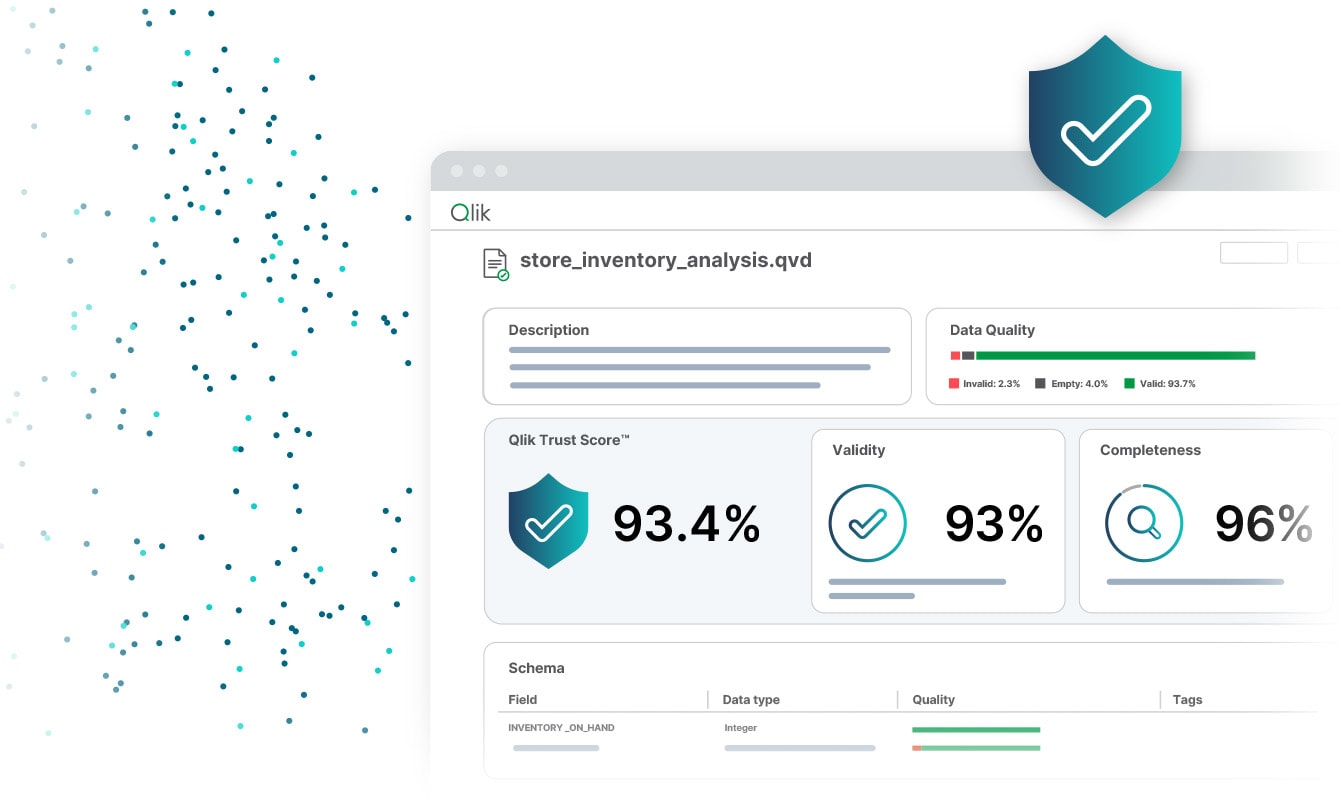
Build confidence with governed, high-quality data.
Comprehensive data quality tools help ensure your data is clean, and ready for decision-making.

Connect, transform, and govern all in one platform.
A unified solution that handles ingestion, transformation, cataloging, and compliance — on-premises or across any cloud environment.

Enable business and technical users alike.
Why Talend Data Fabric leads the market
Gartner
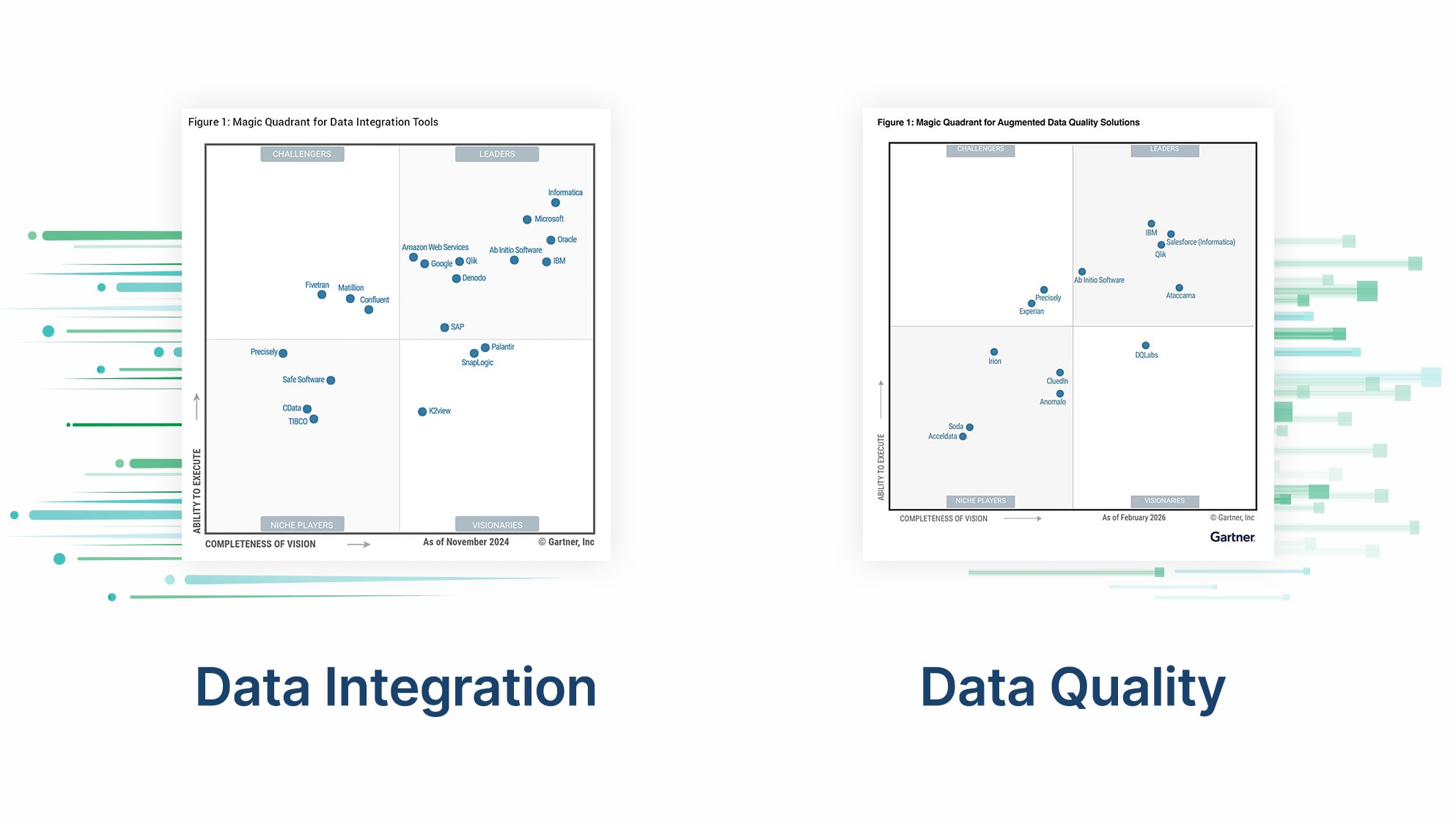
For eleven years, Gartner® has positioned Qlik® as a Leader in its Magic Quadrant™ for Data Integration Tools.
Gartner
See why Qlik was named a Leader in the 2026 Gartner® Magic Quadrant™ for Augmented Data Quality Solutions for the seventh time.
Core components of an enterprise data fabric
Dive deeper into the tools that power trusted, governed, and agile data across your business.
Smart Discovery

Smart Discovery
Scan data sources and auto-profile datasets to spot formats, issues, and patterns fast — reducing manual work and helping teams understand data quicker.


Fast Data Cleansing

Fast Data Cleansing
Spot and fix issues using clicks, not code. Apply cleaning steps across large datasets to reduce errors and save time.


Task‑Based Workflows

Task‑Based Workflows
Assign data review tasks to stewards using structured interfaces to flag issues and ensure efficient review.


Accelerate Development

Accelerate Development
Deliver APIs quickly and seamlessly with native support for powerful CI/CD deployment and containerized microservices


Frequently Asked Questions (FAQs)
A data fabric is an architecture and set of technologies that connects, integrates, and manages data across many different sources and environments — both on-premises and in the cloud — through a unified layer. It uses metadata, automation, and integration to make data easier to access, govern, and use, without physically consolidating everything into one place. The goal is to give users consistent, governed access to distributed data across the whole organization.
A data inventory is a complete, organized record of all the data assets an organization holds — where they live, what they contain, and their condition. Building one, often through automated scanning and profiling, helps teams understand what data exists, spot quality issues, and decide what's safe and useful to use. It's a foundational step for governance, because you can't manage or trust data you haven't accounted for.
Data certification is the process of formally reviewing and approving a dataset as trusted and fit for use, so others can rely on it with confidence. Certified data has been validated against quality and governance standards, often by a data steward, and is typically marked and tracked with an audit trail. Certification gives users a clear signal of which data is officially endorsed for decision-making.
Role-based access control (RBAC) is a security approach that grants data and system permissions based on a user's role rather than assigning them person by person. Users are given roles — such as analyst, steward, or administrator — and each role carries a defined set of access rights, so people can only see and do what their job requires. RBAC simplifies administration and strengthens security and compliance by enforcing least-privilege access.
A data lake is a storage repository that holds large volumes of raw data in its native format, while a data fabric is an architecture layer that connects and manages data across many systems — which may include one or more data lakes. In short, a lake is a place to store data, whereas a fabric is a unifying layer that provides governed access to data wherever it lives. The two are complementary: an organization might use a data fabric to integrate and govern data sitting in lakes, warehouses, and applications alike.
Data quality is a measure of how well data serves its intended purpose, judged across dimensions like accuracy, completeness, consistency, timeliness, validity, and uniqueness. High-quality data leads to reliable decisions and trustworthy AI, while poor-quality data causes errors, wasted effort, and lost confidence. Maintaining it is an ongoing discipline — profiling, cleansing, validating, and monitoring data continuously rather than fixing it once.
Data governance is the system of people, policies, and processes that determines how an organization's data is managed, protected, and used throughout its lifecycle. It establishes who is accountable for data, how it's classified and accessed, and the standards it must meet for quality and compliance. Effective governance turns data into a trusted, well-managed asset and makes regulatory compliance far easier to demonstrate.
A data catalog is a searchable, organized index of an organization's data assets, enriched with metadata that describes what each dataset means, where it came from, and how it can be used. Much like a library catalog helps you find the right book, it helps people quickly discover and understand the right data. By making data findable and its context visible, a catalog is a cornerstone of self-service analytics and governance.
Data preparation is the work of turning raw, messy data into a clean, consistent form that's ready for analysis, reporting, or AI. It typically includes cleansing errors, standardizing formats, combining sources, and shaping the data into the right structure. Because it's often the most time-consuming stage of a data project, self-service preparation tools aim to let more people do it quickly, without heavy coding.
Data stewardship is the hands-on role of taking responsibility for specific data so it stays accurate, consistent, compliant, and fit for use. A data steward reviews and validates data, resolves quality issues, applies rules, and certifies datasets as trustworthy — acting as the human bridge between business context and technical management. Structured workflows and task assignments let stewardship scale across large organizations without becoming a bottleneck.