









Connect, Inspire, Support, Transform: Women Who Qlik


Women have long been a minority in tech. In data analytics, the numbers don’t lie: women hold just 14–25% of leadership roles.
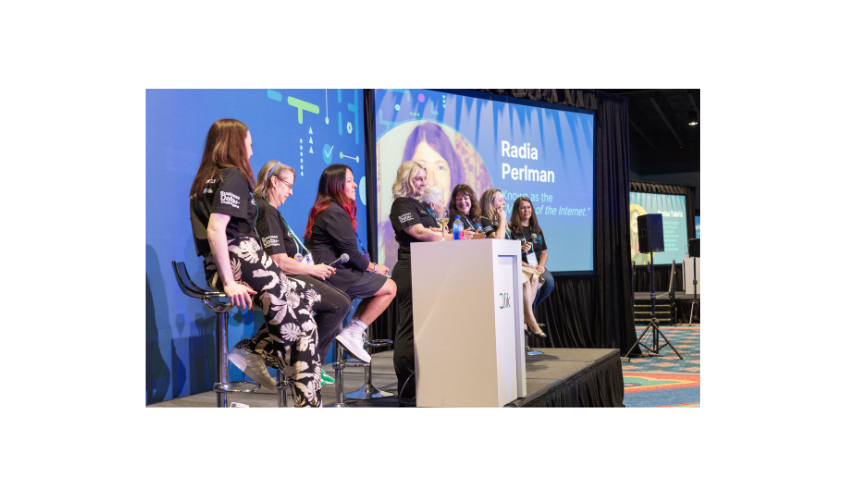
Gwen Stamp, Steph Robinson, and Priscila J. Papazissis Paolinelli weren’t content to quietly count themselves among these leaders. They wanted to create a community of women in data and tech to foster collaboration and action.
Big movements often start with tiny moments — scattered sparks that, when joined, light a fire of transformation. Gwen, Steph, and Priscila combined their individual sparks and founded Women Who Qlik, a global movement to connect, inspire, and support women from all areas of the data community.
The movement has grown, yet there’s plenty more to achieve. From mentorships to minimizing workplace stress, Women Who Qlik continues to highlight challenges and areas of opportunity to advance women in the data industry.
Mentorship pops imposter syndrome’s bubble
Many women struggle with imposter syndrome, but there’s power in recognizing each other and understanding that you’re not alone. “If you feel it’s overwhelming, get out there and talk to other people,” said Laura Ashworth, principal architect of Qlik at Raymond James. “It will boost your confidence because you realize you’re not the only one who’s faced this situation.”
For this reason, mentorship and finding connections have played important parts in many women’s professional careers. When Ashworth joined Raymond James in 1997, she could easily find mentors internally, because the software engineering team was 90% women. Today, however, the gender breakdown in BI skews male, and women in the field don’t have as many women leaders to emulate.
Steph has noticed women taking a backseat even when voicing their opinions, answering questions, and putting themselves forth for opportunities. “Women undervalue themselves,” she said. “No man is saying you can’t be there. In fact, quite the opposite.”
She mentioned the efforts of a colleague who actively sought to add some new perspectives to his team — but only male applicants applied.
What does that mean for the next generation of women in data? Representation matters, and Stamp said that people need role models who inspire them within a given field. “You have to see people living the role to think that it’s an option,” she added. Women Who Qlik helps fill the gap.
“If you feel it’s overwhelming, get out there and talk to other people. It will boost your confidence because you realize you’re not the only one who’s faced this situation.”
— Laura Ashworth, principal architect of Qlik at Raymond James
Often, all it takes is outside validation to see imposter syndrome for what it is. Despite her success, Angelika Klidas, advisor and trainer at Business Data Challengers B.V., questioned whether she belonged in the partner ambassador group at Qlik Connect 2024. Angelika’s mentor called out that moment for what it was: “She said, ‘Angelika, you’re suffering from imposter syndrome,’” Angelika said. “The moment she pointed it out, I started recognizing it. Once I saw it, I could work on it.”
Steph experienced a similar feeling when interviewing for a position at JBS. During the process, she landed an IT role — not what she applied for. “I must have said 20 times, ‘I’m not an IT person, I’m not qualified for this role.’ I was literally trying to talk her out of it,” Steph said. “Now, I work in IT as BI Manager because that one person gave me a chance. You find mentors in very strange places.”
Holly Biscotti, chairwoman at ATCSI, LLC and Dynamic Science, Inc., never had a mentor but took many words of wisdom to heart. While working as an air traffic controller in the US Navy, she spoke with a female pilot on the USS Enterprise and discussed being one of only two women in her 30-person division. The pilot’s advice: “It’s better to be respected than accepted.” Those words made a lasting impression on Holly, who continues to share the sentiment with others.
Likewise, BI Data Analyst and Coach Emma McAlister hasn’t had a singular mentor, nor does she expect one. “It’s a big commitment to expect a traditional mentor-mentee relationship these days,” she said. Instead, she takes a “micro-mentorship” approach where she surrounds herself with people who can offer specific expertise. “It’s a lot more balanced because I can share skills where I excel, too. It’s a knowledge-share ecosystem.”
If you can’t do it confident, do it scared
If imposter syndrome stems from self-doubt, how can women make self-doubt a thing of the past?
These leaders stress that confidence begets confidence. Graduating from computer science over two decades ago, Priscila never lacked belief that she belonged in IT — even though she was often the only woman in the room. When she started studying data literacy, though, she couldn’t find any books on the subject in Portuguese. She saw a need for one but first had to confront internal doubts about her English language abilities.
Angelika stepped in and offered the additional support she needed to regain faith in her abilities. The pair's friendship started after Priscila read Angelika’s book, Data Literacy in Practice (co-authored with Kevin Hanegan), and decided to connect at the Grand Canyon during Qlik Connect Las Vegas. Now, Priscila’s a professor of data analytics who has written the Portuguese book on data literacy that she couldn’t find years ago. “We can do amazing things when we believe,” she said.
The lesson? “If there’s something you want, you have to go for it,” Emma said. “If you’re scared, do it scared. The confidence comes afterward, when you look back at everything you’ve achieved.”
“If there’s something you want, you have to go for it. If you’re scared, do it scared. The confidence comes afterward, when you look back at everything you’ve achieved.”
—Emma McAlister, BI Data Analyst & Coach, Henderson Group
How managers can move the needle
While confidence can come from within, there are ways managers can foster a supportive environment and encourage women to take on bigger and better things.
Demonstrate trust. Gwen remembers the impact of her manager trusting her with a new project early in her career: “It was less about her telling me what to do and more about her being a sounding board, giving me the space to grow, and saying, ‘You’ve got this,’” she said.
Listen. As a manager herself, Steph empowers her team by listening to all ideas. “Listen to that person’s viewpoint and empower them to speak. Maybe you don’t agree with them, but you don’t know where that idea will go,” she said.
Encourage tracking wins. Telling someone to be confident isn’t helpful. To help a team member grow confidence, Emma suggests getting her to track wins, big and small. “Once they see everything they’ve achieved written in front of them, those doubts will naturally fall away.”
“Listen to that person’s viewpoint and empower them to speak. Maybe you don’t agree with them, but you don’t know where that idea will go.” —Steph Robinson, IT BI Manager at JBS
Addressing the emotional elephant in the room
After all, why can’t an effective leader display emotion and empathy? Steph learned to shrug off others’ suggestions for how she should behave and advises other women to do the same. “Be authentic,” she said. “Don’t be afraid to speak your mind. And don’t be afraid to be a woman.”
Minimizing workplace stress
With all of these hurdles on top of a daily workload, learning how to manage stress is a valuable life skill. The Women Who Qlik have a few tried-and-true strategies for other women in the same boat:
Build strong supports. Surround yourself with safe people, including a partner, family, and friends, to help maintain a sense of perspective.
Shift priorities as necessary. Everyone wants to find the right work-life balance, but not all priorities have to remain the same. Some days work might be top priority. Other days it takes a backseat. Learn to shift these priorities depending on the situation.
Don’t settle for the wrong workplace. Finding the environment where you thrive can be a journey in its own right. Keep searching for the right fit. Sometimes, you develop more useful skills when taking the scenic route.
Be yourself. You shouldn’t have to manage your personality. “It’s okay to be weird,” Emma said. “Go ahead and tell that dinosaur joke in the staff room. People either really like it or they don’t. And if they don’t, they’re not your people.”
Everyone should belong in data Every woman in a male-dominated industry has to make their own way. Some women never feel pressure to change; others always do. But everyone deserves to feel they belong in the data community.
Interested in Women Who Qlik? Join the movement — it’s open to everyone!