









From Digital Swamp to Strategic Asset: Taming QVD Chaos with a Data Product Mindset


Data is supposed to be the lifeblood of innovation in today’s enterprises. We’re told to be data-driven, yet many organizations find themselves submerged in a digital swamp — murky, unstructured, and increasingly hard to navigate.
In the world of Qlik analytical users, QVDs (QlikView Data files) offer exceptional performance and flexibility — which is why this format became extremely popular for many use cases. But without structure and oversight, this flexibility can become a double-edged sword, creating massive ecosystems of disconnected, duplicative, and impossible-to-trust files.
This blog outlines how organizations can bring order to QVD chaos — and unlock real value — by adopting a data product mindset.
The Hidden Costs of QVD Chaos
QVDs are powerful and serve as fundamental building blocks for various Qlik analytics customer use cases. For example, they enable faster analytics by offloading workloads from operational databases, and in some cases, are also used for data transformation outside the warehouse.
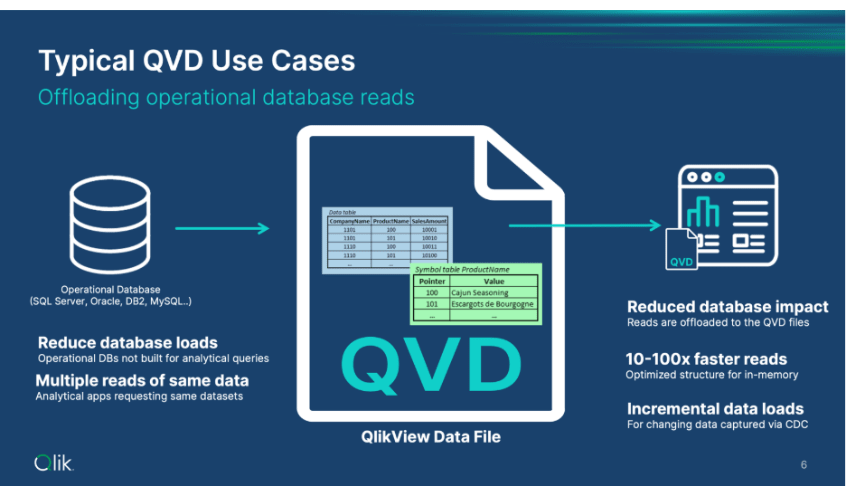
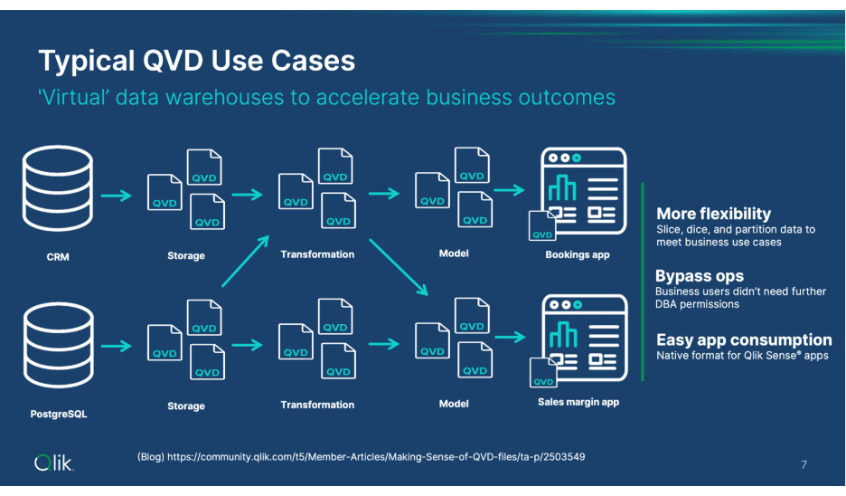
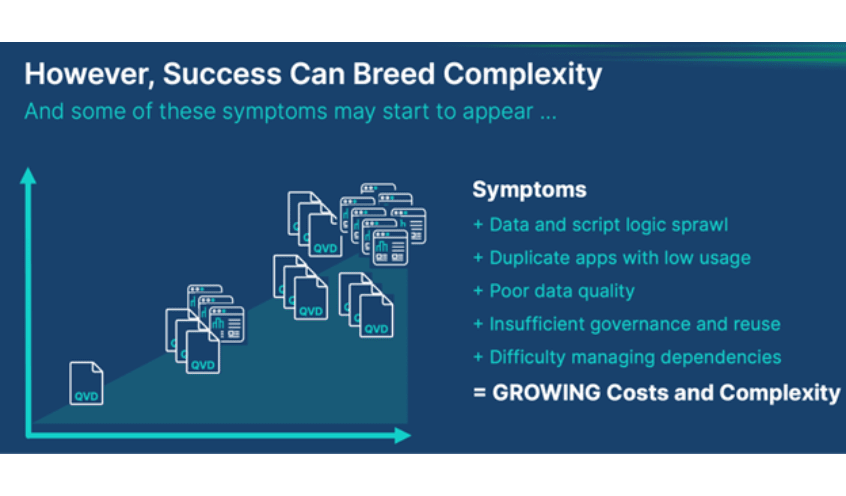
But as organizations scale their use of Qlik, increased use of QVDs can also lead to growing costs and complexity if not managed properly. Issues can include:
Data sprawl: QVDs live everywhere, with no clear inventory or central source of truth.
Redundant work: Different teams recreate similar QVD assets — wasting storage, compute, and effort.
Trust erosion: With multiple copies of QVDs in existence, there is confusion and doubt about which QVD is up to date and can be trusted.
Governance gaps: Lack of ownership, controls, and compliance checks turn data into a liability.
Fragile dependencies: Downstream apps rely on undocumented QVDs, making any change risky.
This sticky spiderweb of sprawl not only slows analytics — it undermines confidence in the QVD data itself.
The Foundation for Scale: An End-to-End Data Management Platform
To move beyond reactive cleanup, organizations need a platform approach — one that’s natively “QVD-aware” and manages the full data lifecycle from ingestion to consumption.
A modern platform should do more than just inventory your QVDs. It must:
Centralize search and discovery
Track lineage inclusive of QVD assets from source to app
Provide enriched metadata that enables QVD data product reuse across teams
Automate quality checks and governance without additional manual effort
Streamline the creation and publication of QVD data products in the data marketplace
This shift is about turning scattered QVDs into reusable, trusted data product assets — and aligning them to domain-specific business outcomes.

The Shift to a Data Product Mindset
The most effective way to tame QVD chaos is to treat your data like a product. This approach bridges the gap between data producers (like IT and engineering) and consumers (like business teams), fostering collaboration and accountability.
Need a refresher on what a data product is? Get a quick primer in the first blog in this series, What Are Data Products, Anyway?
Enter the Data Product Manager, a critical new role that owns the lifecycle and success of each data product and ensures it meets technical standards as well as business needs.
Pro Tip: The best way to scale this approach is with a data product marketplace — a central place where users can browse, request, and access certified, trustworthy data products.
Top 3 Reasons To Adopt a Data Product Mindset With QVDs
Adopting a data product mindset for QVDs isn’t just about better file management — it’s about unlocking measurable business value. With this perspective, organizations can reduce inefficiencies, improve trust in their analytics, and accelerate time to insight. This shift turns scattered data assets into strategic enablers for decision making and innovation. It also helps:
Improve efficiency and cut costs
By curating QVDs into standardized, domain-specific data products — and making them easily searchable in a data marketplace — teams can eliminate redundant work and identify rarely used QVD data products that can be decommissioned to save money.
Improve trust with quality and governance controls
With tools like the Qlik Talend Trust Score™ and field-level quality checks, teams can instantly assess data health and consistency across use cases. Clear ownership, lifecycle management, and end-to-end lineage tracking further build confidence — making QVD-based insights not just faster, but more reliable and compliant.
Simplify and accelerate app development
When QVDs are packaged as data products, developers gain instant access to curated datasets complete with context, scripts, and models. This reduces the “plumbing work” required to prepare data, allowing teams to focus on delivering value rather than wrangling files. Teams have full visibility thanks to end-to-end lineage from source to data product to app, and they can build and launch Qlik Sense® apps in just a few clicks with total confidence in the underlying data.
Getting Started with QVD-based Data Products: Your Roadmap to Implementation
Ready to get started with data products for QVDs? Here’s a practical, five-step path to help you scale:
Step 1: Audit your landscape
Map your existing QVDs to business outcomes. Identify duplicates, blind spots, and ownership gaps.
Step 2: Define data product domains
Identify high-value business outcomes that would benefit from curated, reusable data products. Assign Data Product Managers as owners of the data product.
Step 3: Establish standard processes
Define a clear lifecycle for building, documenting, and governing each data product — orchestrated by the data product manager. If your organization doesn’t have a Data Product Manager, identify someone with both domain knowledge and data fluency to take on the role of product owner, even if informally at first.
Step 4: Launch the data product in the data marketplace
Centralize discovery and access through the data marketplace, making it easy for users to find and reuse trusted QVD-based data products. Clearly define your data products or use Qlik’s AI feature to auto-generate meaningful descriptions.
Step 5: Measure and iterate
Track adoption, usage, and business value. Use real feedback to improve and expand your data product catalog.
Start small — prove the model with one use case. Then scale.
Ready to Take the Leap?
Platforms like Qlik Talend Cloud® help you manage your entire analytics data pipeline, build trusted QVD-based data products, and scale adoption with built-in governance and control. To learn more, explore Qlik Talend Cloud on your own, or try it free with a Qlik Talend Cloud trial.