SELF-HEALING DATA PIPELINES
Make Your Data Work for AI with Pipelines That Fix Themselves
Accelerate data reliability with self-healing pipelines that detect, diagnose, and fix issues automatically to keep AI-ready data trusted and flowing.
Achieve reliable data pipelines with trusted, contextual data
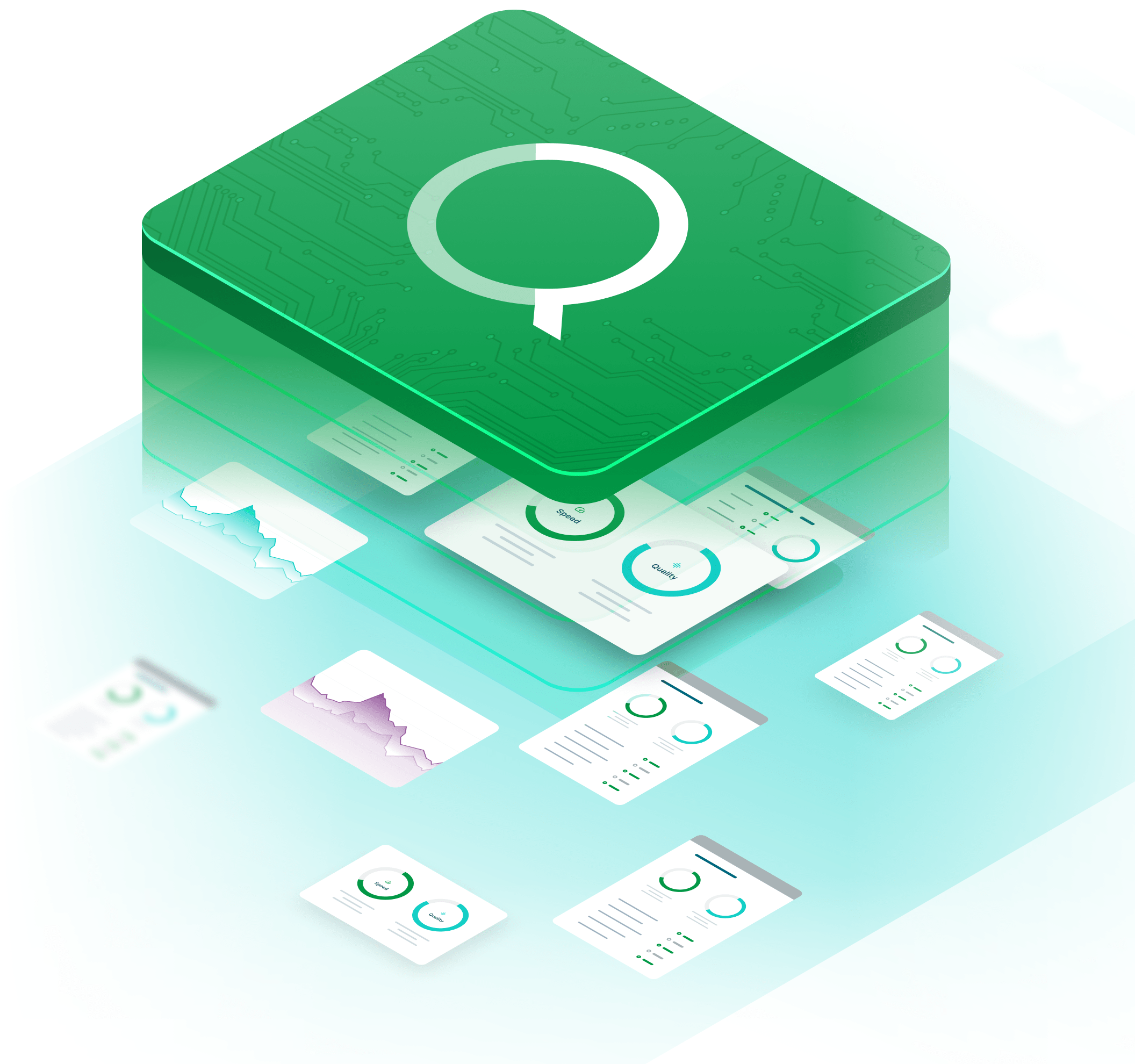
Traditional data integration is prone to breakage when upstream sources change. Qlik delivers autonomous data reliability with self-healing ETL pipelines that keep your enterprise data contextually accurate, trusted, and ready for advanced consumption.

LLM powered data quality
Leverage intelligent automation to continuously profile, cleanse, and validate your data before it reaches downstream users.

Proactive anomaly detection
Identify data drift, unexpected schema modifications, and missing records in real time to prevent dashboard failures.

Automated issue remediation
Automatically reroute data, restart failed tasks, and resolve bottlenecks without waiting for manual human intervention.
How Qlik's self-healing data pipelines work
Step 1 - Continuous monitoring: Data pipeline anomaly detection algorithms continuously scan active data flows for unexpected drift, volume drops, or schema modifications
Step 2 - Root-cause diagnosis: When an anomaly occurs, the system evaluates the business context and metadata to determine the exact failure point and the best remediation strategy
Step 3 - Autonomous execution: The pipeline automatically deploys fixes, such as adjusting schema mappings or healing interrupted syncs, restoring the flow of trusted data instantly

Accelerate data delivery with fast, cost-efficient performance

Build dynamic, resilient workflows
Spend less time fixing broken scripts and more time on strategic data initiatives by leveraging robust, automated routing using Qlik Talend®.
Full visibility and control
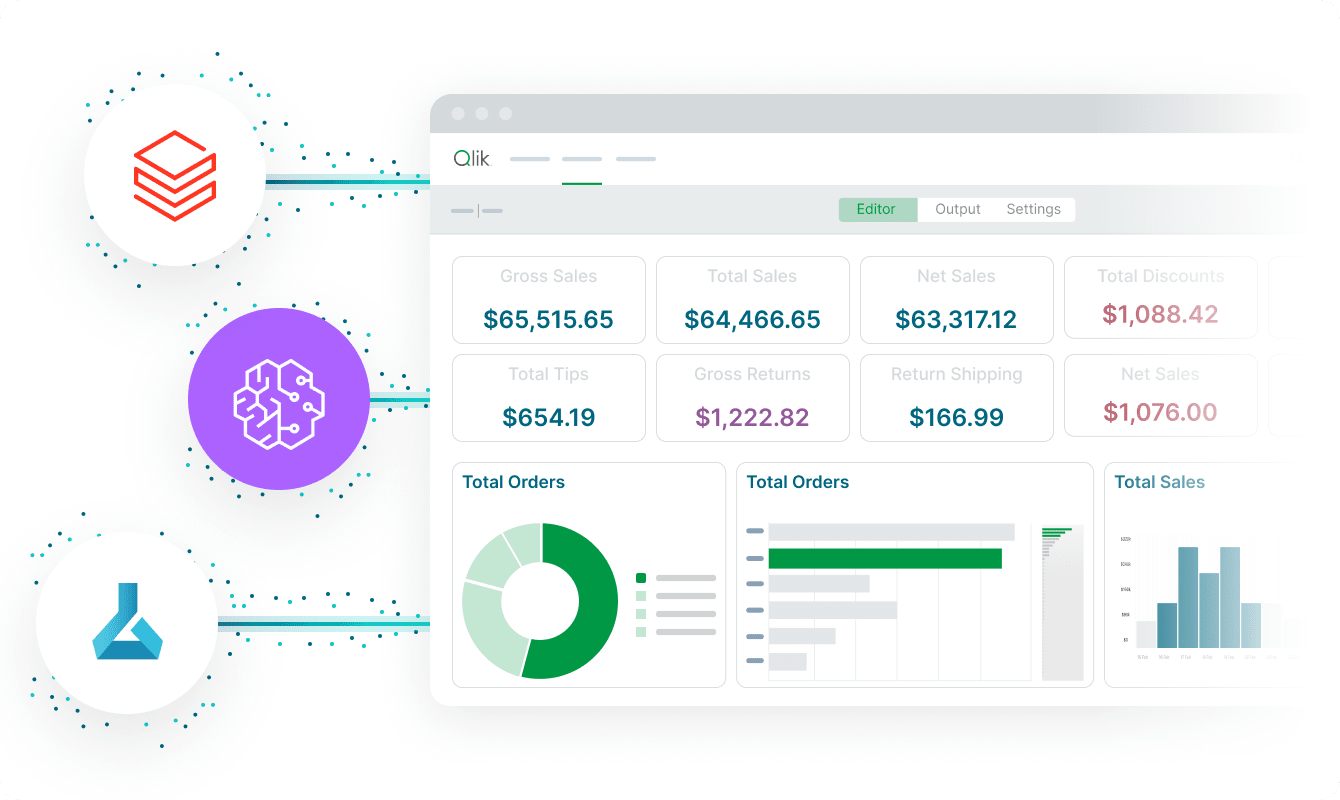
Gain complete insight into the health of your sources. By actively tracking lineage and performance metrics through augmented analytics, you can diagnose issues instantly and reduce data downtime.

Fuel analytical models with confidence
Protect data integrity while scaling your AI initiatives. Ensure your self-healing architecture consistently delivers reliable results for predictive analytics and Qlik Cloud Analytics workflows.

Adapt as your data and AI needs evolve
Future-proof your infrastructure with an open and flexible solution designed to integrate across hybrid environments, preventing vendor lock-in, including Agentic AI orchestration.
Core capabilities of Qlik's self-healing data pipelines

AI driven data observability
Monitor pipeline health continuously so teams see issues before they break downstream analytics and AI.

Data pipeline anomaly detection
Catch schema changes, volume drops, and unexpected drift in real time across active data flows.

Self-healing ETL pipelines
Automatically remediate common failures, restart interrupted jobs, and restore trusted data movement without ticket queues.

LLM powered data quality
Use intelligent automation to profile, cleanse, and validate data so only reliable inputs reach AI and analytics.

Metadata driven data pipelines
Drive routing and remediation from metadata and lineage so pipelines adapt as sources and structures change.

Autonomous data reliability
Keep AI-ready data flowing with less manual troubleshooting and stronger confidence in every downstream output.
Self-healing data pipelines FAQs
Self-healing data pipelines are automated frameworks that use machine learning and AI to independently detect, diagnose, and remediate errors such as schema changes or data drift without requiring manual human intervention, thereby minimizing data downtime.
By continuously monitoring data streams for anomalies and proactively resolving issues as they occur, these systems prevent corrupted, stale, or incomplete data from reaching downstream analytics solutions. This ensures business users always have access to highly accurate information.
Yes. Modern self-healing pipelines use metadata-driven approaches and open connectivity to integrate across on-premises systems, multiple cloud data warehouses, and legacy environments, ensuring reliability across environments.
Connect to 500+ data sources with Qlik’s analytics integrations

SAP

Adobe

IBM

AWS

MySQL

Jira

Azure

MS SQL

Apache

Mongo DB
SAP
Adobe
IBM
AWS
MySQL
Jira
Azure
MS SQL
Apache
Mongo DB
SAP
Adobe
IBM
AWS
MySQL
Jira
Azure
MS SQL
Apache
Mongo DB
SAP
Adobe
IBM
AWS
MySQL
Jira
Azure
MS SQL
Apache
Mongo DB
SAP
Adobe
IBM
AWS
MySQL
Jira
Azure
MS SQL
Apache
Mongo DB

Oracle

Salesforce

Workday

Apache Iceberg

CircleCI

Zendesk

Snowflake

Databricks


OpenAI

Intuit
Oracle
Salesforce
Workday
Apache Iceberg
CircleCI
Zendesk
Snowflake
Databricks
OpenAI
Intuit
Oracle
Salesforce
Workday
Apache Iceberg
CircleCI
Zendesk
Snowflake
Databricks
OpenAI
Intuit
Oracle
Salesforce
Workday
Apache Iceberg
CircleCI
Zendesk
Snowflake
Databricks
OpenAI
Intuit
Oracle
Salesforce
Workday
Apache Iceberg
CircleCI
Zendesk
Snowflake
Databricks
OpenAI
Intuit