AMAZON REDSHIFT DATA INTEGRATION
Real-Time Change Data Capture (CDC) for Amazon Redshift
Deliver live data to AWS. Qlik® automates continuous Change Data Capture (CDC) and data pipelines, feeding Amazon Redshift with real-time, analytics-ready data.

Accelerate time-to-insight with continuous Amazon Redshift pipelines
Qlik enables you to stream enterprise data securely and efficiently to Redshift, eliminating batch delays and manual data engineering.

Streamline AWS data delivery
Replace brittle, manual ETL scripts with automated, real-time data pipelines designed specifically for Amazon's cloud ecosystem.

Zero-impact data extraction
Utilize log-based CDC to read database changes instantly, ensuring your on-premises and cloud transactional systems run flawlessly.

Power live AWS analytics
Feed Amazon Redshift, QuickSight, and SageMaker with up-to-the-second data for accurate BI reporting and machine learning models.
How Qlik's Amazon Redshift CDC integration works
Step 1 - Connect securely to a massive portfolio of source systems, ranging from on-premises SAP environments to legacy mainframes and relational databases.
Step 2 - Capture data modifications (inserts, updates, deletes) as they happen using non-intrusive, log-based change data capture technology.
Step 3 - Stream data continuously into Amazon Redshift, utilizing AWS native infrastructure to efficiently load and transform data at scale.

Why choose Qlik for Amazon Redshift CDC?

Load data at maximum velocity
Qlik intelligently stages data in Amazon S3 and leverages native Redshift COPY commands to execute highly parallel, lightning-fast data loads that won't bottleneck your pipelines.

Keep tables perfectly synced automatically
When database administrators add or modify columns in your source systems, Qlik automatically propagates those structural changes to your Amazon Redshift tables without halting data flow.
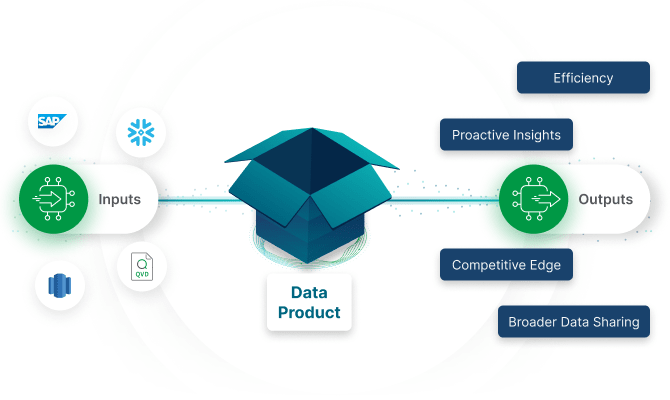
Unlock complex SAP data for Redshift
Extracting SAP data is notoriously difficult. Qlik provides specialized integration capabilities that automatically decode complex SAP metadata and stream it directly into your AWS data warehouse.
Key features of Qlik's Amazon Redshift solution

Pushdown ELT processing
Maximize your AWS investment by generating native SQL to execute heavy data transformations directly within Redshift's compute engine.

Seamless AWS integration
Operate natively within the AWS ecosystem, supporting Amazon S3, EMR, RDS, Aurora, and AWS Key Management Service (KMS).

Enterprise-grade security
Move data securely via AWS PrivateLink and Virtual Private Cloud (VPC) endpoints, assisting with your strict data privacy and compliance objectives.

In-flight data filtering
Apply dynamic masking and row-level filtering to ensure sensitive data (PII) is protected before it ever reaches Amazon Redshift.

Automated historical loads
Manage both massive historical data migrations and the seamless transition to continuous CDC streaming within one automated workflow.

End-to-end data lineage
Trace your data's complete journey from the initial source database transaction all the way to the final Redshift table.
Amazon Redshift CDC FAQs
Change Data Capture (CDC) is an integration process that identifies and captures new, updated, or deleted data in source systems and streams those exact changes to Amazon Redshift in real time, avoiding the delays of bulk batch loading.
To handle high-volume streaming, Qlik uses an optimized architecture. It efficiently batches micro-streams of captured data into Amazon S3, and then uses native Amazon Redshift COPY commands to load the data with massive parallelism.
No. Qlik utilizes log-based CDC, meaning it reads the internal transaction logs of your source databases (like Oracle or SQL Server) rather than querying the tables directly. This guarantees near-zero performance impact on your production systems.
Connect to 500+ data sources with Qlik’s analytics integrations

SAP

Adobe

IBM

AWS

MySQL

Jira

Azure

MS SQL

Apache

Mongo DB
SAP
Adobe
IBM
AWS
MySQL
Jira
Azure
MS SQL
Apache
Mongo DB
SAP
Adobe
IBM
AWS
MySQL
Jira
Azure
MS SQL
Apache
Mongo DB
SAP
Adobe
IBM
AWS
MySQL
Jira
Azure
MS SQL
Apache
Mongo DB
SAP
Adobe
IBM
AWS
MySQL
Jira
Azure
MS SQL
Apache
Mongo DB

Oracle

Salesforce

Workday

Apache Iceberg

CircleCI

Zendesk

Snowflake

Databricks


OpenAI

Intuit
Oracle
Salesforce
Workday
Apache Iceberg
CircleCI
Zendesk
Snowflake
Databricks
OpenAI
Intuit
Oracle
Salesforce
Workday
Apache Iceberg
CircleCI
Zendesk
Snowflake
Databricks
OpenAI
Intuit
Oracle
Salesforce
Workday
Apache Iceberg
CircleCI
Zendesk
Snowflake
Databricks
OpenAI
Intuit
Oracle
Salesforce
Workday
Apache Iceberg
CircleCI
Zendesk
Snowflake
Databricks
OpenAI
Intuit


