DATA INTEGRATION AS A SERVICE
Simplify Cloud Data Management with Qlik's Data Integration as a Service
Simplify cloud data integration with fully managed integration services. Connect, transform, and deliver analytics-ready data across hybrid and multi-cloud environments without infrastructure overhead.
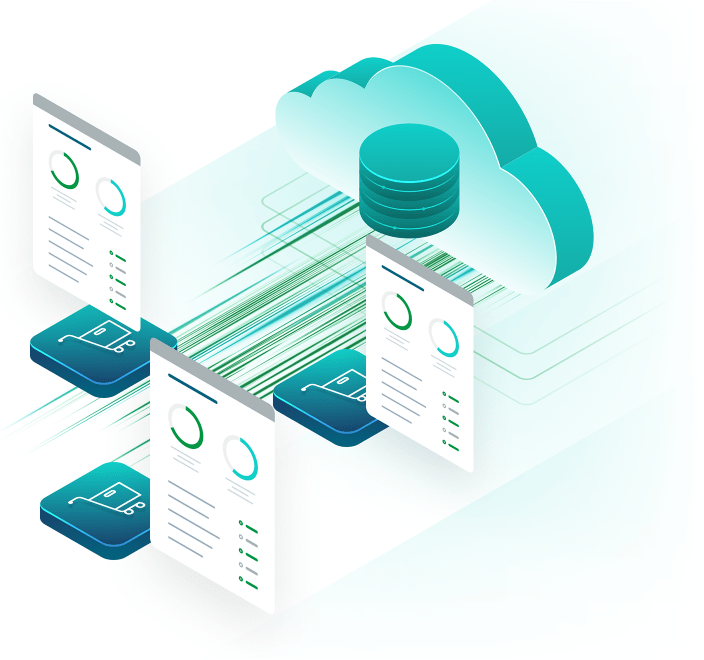
Power every decision with managed, scalable data integration
Eliminate infrastructure complexity with a fully managed integration service that handles data connectivity, transformation, and delivery across clouds while you focus on analytics and business value.

Accelerate cloud data delivery across teams and regions
Deploy data integration instantly across geographic regions and business units without provisioning servers, managing infrastructure, or coordinating complex deployment processes.

Automate integration workflows and deliver analytics-ready data
Configure automated pipelines through intuitive interfaces that connect sources, apply transformations, and deliver data to warehouses and analytics tools without writing code or managing infrastructure.

Support business decisions with trusted data access
Provide consistent, governed access to integrated data across the organization with managed services that maintain availability, security, and performance without dedicated operations teams.
How does Qlik's data integration as a service work?
Step 1 - Connect to available cloud or on-premises data source
Step 2 - Automate data transformation and synchronization
Step 3 - Deliver unified data to warehouses and analytics tools
Step 4 - Monitor, optimize, and scale seamlessly

Why choose Qlik's data integration as a service?

Managed service with enterprise security and compliance
Leverage SOC 2, ISO 27001, and GDPR-compliant infrastructure with automated security updates, encryption, and access controls managed by Qlik's cloud operations team.

Elastic scaling without capacity planning
Process growing data volumes automatically with infrastructure that scales elastically based on demand, eliminating the need for capacity planning and manual resource management.

Visual development that accelerates integration
Build integration pipelines through drag-and-drop interfaces that require no coding, while providing scripting options for advanced users who need custom transformation logic.

Always-on service with proactive monitoring
Rely on Qlik's cloud operations team for infrastructure management, patching, upgrades, and 24/7 monitoring that ensures high availability without internal DevOps resources.

Trusted by organizations worldwide
Join enterprises that accelerated cloud migration and analytics delivery by eliminating infrastructure management overhead with Qlik's fully managed integration service.
Key capabilities of Qlik's data integration as a service
Data pipelines and continuous replication
Create automated pipelines that continuously move and replicate data between sources and destinations with change data capture that maintains near real-time synchronization.

Cloud-native transformation and automation
Apply transformations using cloud-optimized processing that automatically scales compute resources based on workload, maintaining consistent performance during data volume spikes.

Integration with data warehouses, lakes, and BI platforms
Connect natively with Snowflake, Databricks, AWS, Azure, Google Cloud, and leading BI platforms through optimized connectors that leverage cloud platform features.

Intelligent monitoring and governance controls
Track pipeline health, data quality, and processing performance through comprehensive dashboards while enforcing governance policies and access controls automatically.

Secure data transfer and compliance management
Protect data in transit with encryption, maintain compliance with automated controls, and audit all integration activities for regulatory reporting and security analysis.

Centralized access and collaboration tools
Trusted by leading enterprises worldwide


What our customers say


We needed to consolidate data in one place, from heterogeneous sources, updated in almost real-time. That’s what Qlik enables for us.


Connect to 500+ data sources with Qlik’s analytics integrations

SAP

Adobe

IBM

AWS

MySQL

Jira

Azure

MS SQL

Apache

Mongo DB
SAP
Adobe
IBM
AWS
MySQL
Jira
Azure
MS SQL
Apache
Mongo DB
SAP
Adobe
IBM
AWS
MySQL
Jira
Azure
MS SQL
Apache
Mongo DB
SAP
Adobe
IBM
AWS
MySQL
Jira
Azure
MS SQL
Apache
Mongo DB
SAP
Adobe
IBM
AWS
MySQL
Jira
Azure
MS SQL
Apache
Mongo DB

Oracle

Salesforce

Workday

Apache Iceberg

CircleCI

Zendesk

Snowflake

Databricks


OpenAI

Intuit
Oracle
Salesforce
Workday
Apache Iceberg
CircleCI
Zendesk
Snowflake
Databricks
OpenAI
Intuit
Oracle
Salesforce
Workday
Apache Iceberg
CircleCI
Zendesk
Snowflake
Databricks
OpenAI
Intuit
Oracle
Salesforce
Workday
Apache Iceberg
CircleCI
Zendesk
Snowflake
Databricks
OpenAI
Intuit
Oracle
Salesforce
Workday
Apache Iceberg
CircleCI
Zendesk
Snowflake
Databricks
OpenAI
Intuit
Resources


Data integration as a service FAQs
Managed integration eliminates infrastructure provisioning, maintenance, patching, and monitoring, with Qlik's cloud team handling operations while you configure integration logic and workflows.
Yes, secure connectors enable integration between cloud services and on-premises databases or applications, with encrypted connections that traverse firewalls safely.
Pricing typically follows consumption-based models tied to data volume, number of connections, or processing hours, eliminating capital expenses and aligning costs with actual usage.
Integration logic is portable, allowing migration to self-hosted deployment if requirements change, with Qlik providing migration assistance and compatible self-hosted platform options.